Early Childhood
Learn the Signs. Act Early.

Connecticut Learn the Signs. Act Early. (LTSAE) is a statewide project that is dedicated to promoting early screening and early identification of developmental delays. LTSAE educates families, communities, and organizations about the importance of developmental monitoring through collaboration, dissemination, and outreach.
LTSAE works closely with the CT Help Me Grow Advisory Committee. We support Help Me Grow’s ongoing efforts by promoting and distributing informational materials and by working with the Advisory Committee to plan communication and outreach methods to share resources directly with families.
Other projects LTSAE has completed include training social workers on developmental milestones, working with early childhood organizations throughout Connecticut to provide developmental monitoring training and LTSAE materials, collaborating with early childhood partners to develop a webinar and guidance document, and partnering with community health centers and birthing hospitals in the state to conduct LTSAE training and disseminate materials to families.
For more information about Learn the Signs. Act Early. Contact our program coordinator, Bethanne Vergean at vergean@uchc.edu
CDC Resources

CDC's Milestone Tracker App
Milestones matter! Track your child’s milestones from age 2 months to 5 years with CDC’s easy-to-use illustrated checklists; get tips from CDC for encouraging your child’s development; and find out what to do if you are ever concerned about how your child is developing.
From birth to age 5, your child should reach milestones in how he or she plays, learns, speaks, acts, and moves. Photos and videos in this app illustrate each milestone and make tracking them for your child easy and fun!

Developmental Monitoring and Screening
Taking a first step, waving “bye-bye,” and pointing to something interesting are all developmental milestones, or things most children can do by a certain age. Children reach many milestones in how they play, learn, speak, act, and move. Developmental monitoring and screening are ways to look for your child’s developmental milestones.

Tools for Tracking Milestones
How your child plays, learns, speaks, acts, and moves offers important clues about your child’s development. Developmental milestones are things most children can do by a certain age. Look inside for milestones to watch for in your child and tips for how you can help your child learn and grow from birth to age 5.
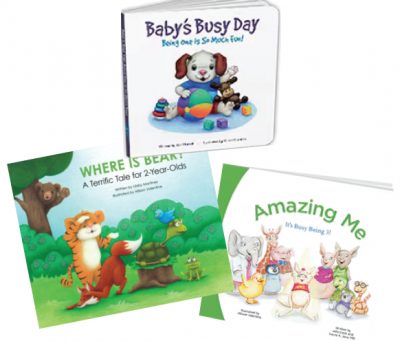
Children's Books
Talk, read, sing and play with your child every day. CDC’s amazing books can help! Baby’s Busy Day Un día ocupado del bebé, en Español, Where is Bear? ¿Dónde Está Osito?, en Español, and Amazing Me Soy Maravilloso, en Español, are fun for children and show you what to look for as your child grows.
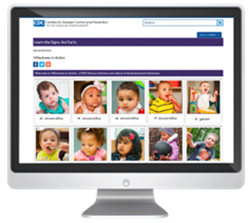
Milestones In Action
Milestones in Action is a free photo and video library of developmental milestones from birth to 5 years of age. Parents and Caregivers can click on an age to see photo and video examples of important developmental milestones.

How To Get Help For Your Child
Talking to the doctor is the first step toward getting help for your child if you are concerned about his or her development (how your child plays, learns, speaks, acts, or moves). Don’t wait. Acting early can make a real difference!
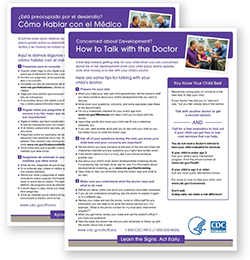
How To Talk With The Doctor Tip Sheet
A first step toward getting help for your child when you are concerned about his or her development (how your child plays, learns, speaks, acts and moves) is to talk with your child’s doctor.
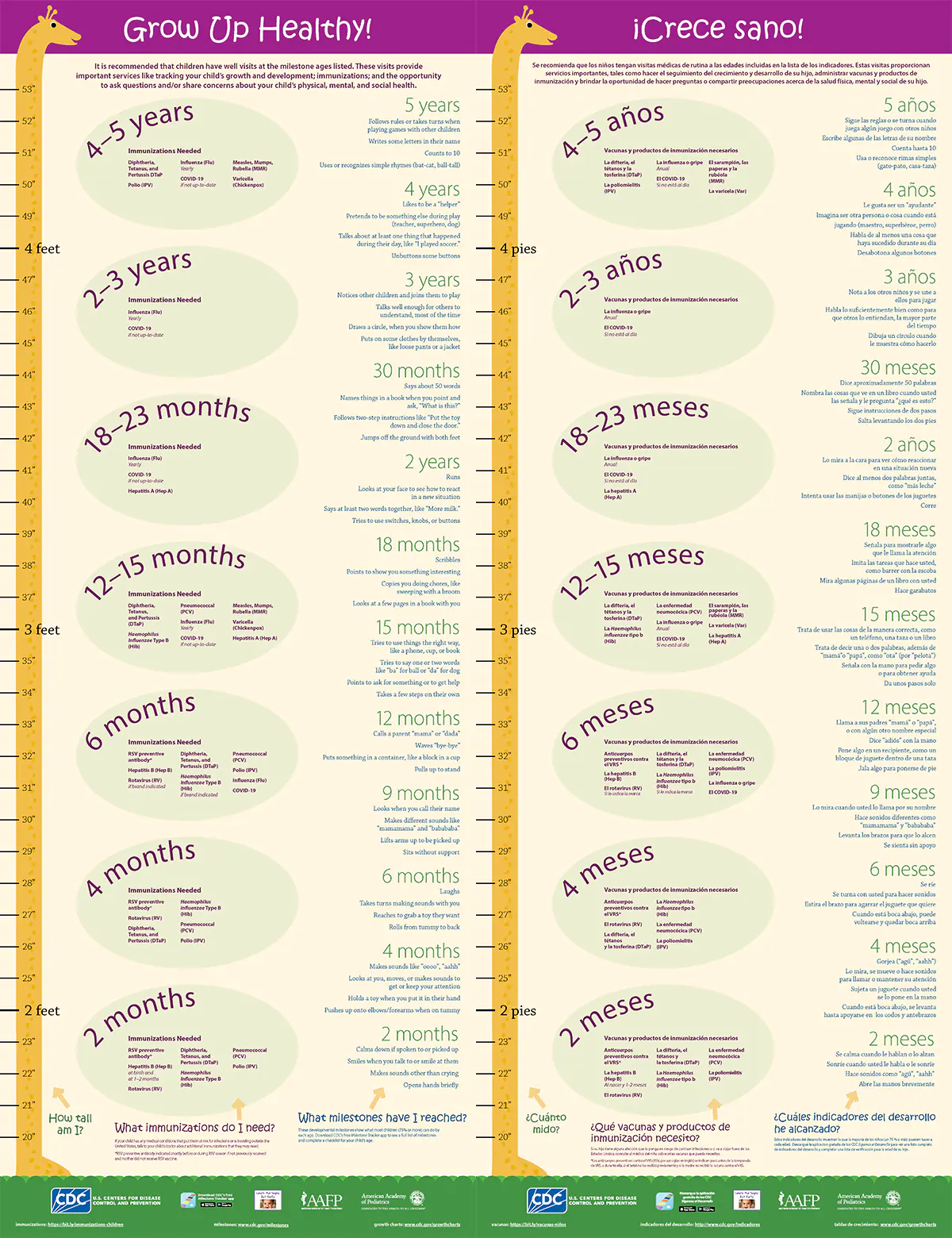
Grow Up Healthy Growth Chart
It is recommended that children have well visits at the milestone ages listed. These visits provide important services like tracking your child’s growth and development; immunizations; and the opportunity to ask questions and/or share concerns about your child’s physical, mental, and social health.

Developmental Monitoring: Getting The Conversation Started
English Spanish
The talking points in this document make up just one example of how you can introduce the milestone checklist. For your convenience, there are separate talking points for in person or virtual discussion, as well as talking points that are common to both.

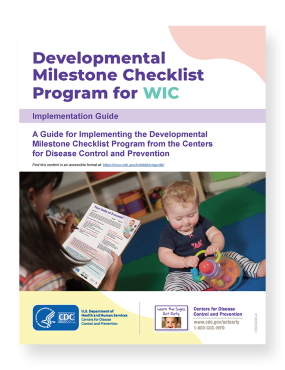
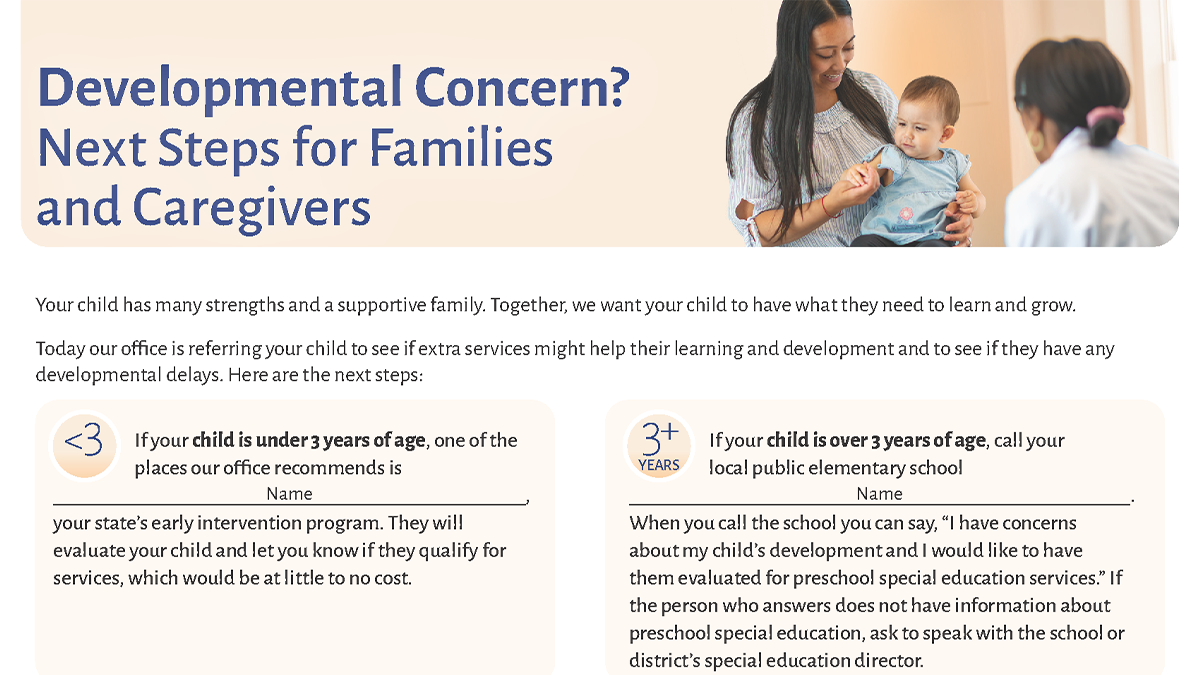
WIC Developmental Milestone Checklist Program Implementation Guide
WIC providers know that how a child plays, learns, speaks, acts, and moves for his or her age are important signs of a child’s healthy growth and development.
The Developmental Milestone Checklist Program, developed in collaboration with WIC staff and tested in WIC clinics, helps you engage parents in monitoring their children’s development and support them with
timely referrals when needed.
Use with families and/or caregivers to support them when developmental referrals are needed.
Connecticut Resources
211 Child Development
211 CD is a free and confidential specialized service of the United Way of Connecticut that acts as the central access point for early childhood programs, developmental screenings, and intervention services across the state.
Care Coordinators are available Monday through Friday from 8 AM – 6 PM

Sparkler
Sparkler is available to all Connecticut families with children prenatal – age 5 and programs serving those families thanks to the CT Office of Early Childhood. Sparkler’s mobile app is free for Connecticut families to use in English or Spanish, iOS or Android, smartphone or tablet. Use the Access Code CT or another code that your school or provider has provided to you to sign up and link to local resources. Sparkler allows families to:
- Know: Understand your child’s development with the mobile Ages & Stages Questionnaires® (ASQ)
- Play: Spark learning with fun, off-screen activities to play together and tips for parents
- Grow: Follow your child’s progress in your Sparkler scrapbook
- Connect: Get tips and answers from experts at 211 Child Development or your school/provider
Help Me Grow
There are many programs in the community that help families and children, but it can be hard to know where to start. Help Me Grow connects doctors, early childhood teachers, and community partners to create a network of programs and resources for children.
211 Child Development is Connecticut’s access point for this network. When you call 211 Child Development, providers and families can talk with a care coordinator to find resources that fit their needs.
- Help finding local programs, like family resource centers, home visiting programs, supports for behavior, evaluations, and other programs for parents
- Information and materials about developmental milestones and fun play activities
- Developmental screenings to check your child’s growth and milestones
- Tools and tips to help you advocate for your child
CT Birth to Three
Birth to Three offers supports to families with children who are under age 3 and have either a,
Significant developmental delay based on a standardized test or
Medical condition (diagnosed by a doctor) that’s likely to result in a developmental delay
To make a referral

CT Early Childhood Special Education
Special education and related services are required by federal and state law. The laws are intended to ensure that young children with disabilities are provided a free and appropriate public education in accordance with their individual needs. Early childhood special education as defined by the federal law known as the Individuals with Disabilities Education Act (IDEA) is for 3-, 4- and 5-year-old children with disabilities who require special education. In Connecticut, special education and related services are available to eligible children by age 3 and are provided by local and regional school districts.
Read to Grow
Read to Grow is a Connecticut based early literacy nonprofit that operates statewide, providing more than 120,000 books a year to children and families through our Books for Babies, Books for Kids, and Bookmobile programs. Whether it’s supporting families as their child’s first and most important teacher by giving every baby born in nearly every CT hospital their first book or helping families build home libraries through regular and frequent book distributions, Read to Grow is committed to the power of literacy to change lives and to the vision that all children deserve books of their own.

Connecticut Office of Early Childhood
The Connecticut Office of Early Childhood (OEC) focuses on children from birth into grade school. Helping young children learn, develop, and overcome barriers will have benefits that last a lifetime.
OEC is a state agency that oversees a network of programs and services that help young children and families thrive and a key part of that work is supporting the providers, teachers, and other professionals who’ve dedicated their careers to caring for and educating children.
Connecticut State Department of Public Health
The purpose of this site is to present matters of Public Health interest throughout the state of Connecticut, including its many residents, businesses, and visitors.
-
Assuring the conditions in which people can be healthy;
- Preventing disease, injury, and disability, and
- Promoting the equal enjoyment of the highest attainable standard of health, which is a human right and a priority of the state.
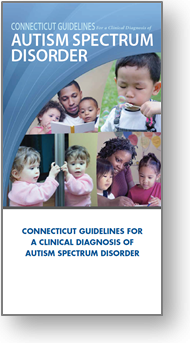
Connecticut Guidelines for a Clinical Diagnosis of Autism Spectrum Disorder
The Connecticut Guidelines for a Clinical Diagnosis of Autism Spectrum Disorder was developed in collaboration with the National Center on Birth Defects and Developmental Disabilities at the Centers for Disease Control and Prevention (CDC), the Maternal and Child Health Bureau (MCHB) at the Health Resources and Services Administration (HRSA), and the Association of University Centers on Disabilities (AUCD). These guidelines provide recommendations and guidance for the clinical diagnostic evaluation of children who may have Autism Spectrum Disorder in the state of Connecticut.